




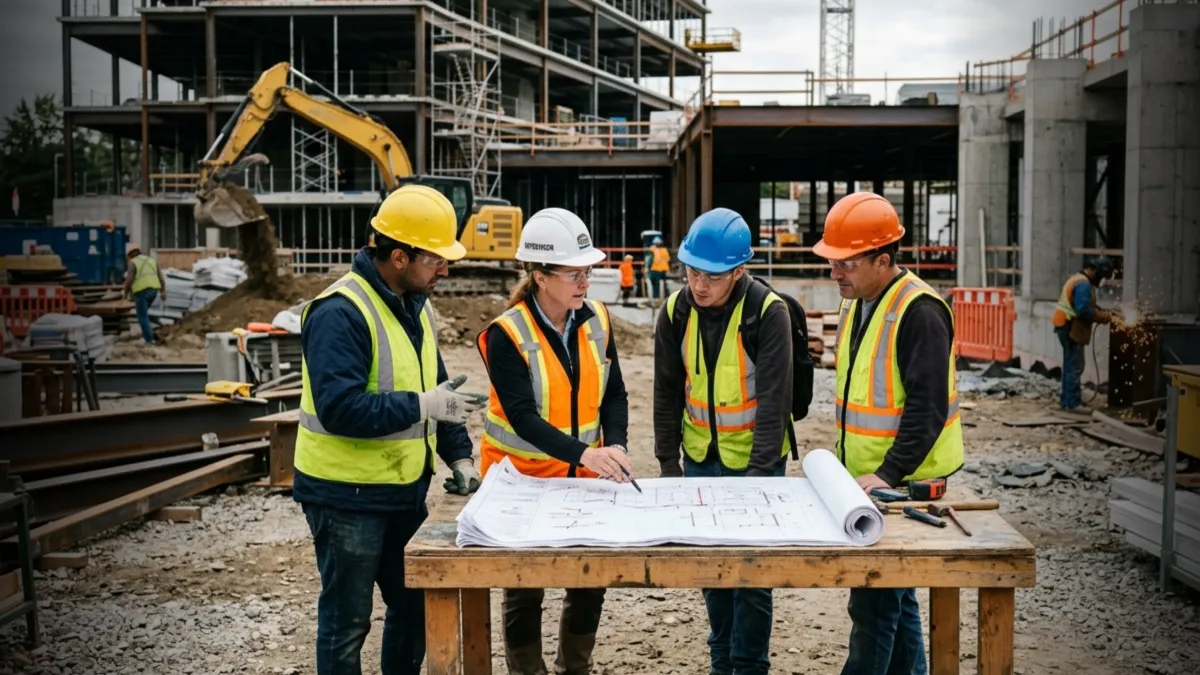
Putting Respect First: Why Human Dignity Matters in Construction Safety
When was the last time your site safety plan mentioned dignity?
If you're like most construction managers, the answer is probably never. We talk about hazard registers, PPE compliance, toolbox talks, and incident rates. We discuss systems, processes, and procedures.
But the deeper human elements that underpin workplace safety rarely make it into the conversation.
Yet scratch beneath the surface of most workplace incidents, mental health claims, or cultural breakdowns on construction sites, and you'll often find the same pattern: people feeling undervalued, unheard, or treated as interchangeable parts in a production machine.
The Missing Link in Modern Safety
Construction safety has come a long way. We've reduced physical injuries through better equipment, clearer standards, and stronger systems.
But we’re now dealing with a different category of risk.
Mental health concerns are rising. Workers are showing up physically but checking out mentally. Site culture can shift quickly under pressure. Teams that look fine on paper don’t always hold together when conditions tighten.
These aren’t side issues.
They are safety issues.
And in many cases, they trace back to how people are treated at work.
What Does Dignity Actually Mean on Site?
Dignity isn’t about lowering standards or making things soft.
In construction, it means recognising that every person on your site, from apprentice to project manager, deserves fair treatment, respect, and the ability to raise concerns without fear.
It shows up in everyday moments:
How you respond when someone questions a work method
Whether casual workers receive the same safety briefing as permanent staff
If people feel comfortable reporting near-misses without blame
Whether concerns are dismissed based on experience, trade, or background
When dignity is present, people engage differently.
They speak up.
They look out for each other.
They take ownership of safety.
When it’s absent, you get silence, shortcuts, and disconnection.
That’s where risk starts to build.
The Real Cost of Getting This Wrong
Ignoring the human side of safety doesn’t just affect culture. It affects outcomes.
Workers who feel disrespected are less likely to report hazards. They’re more likely to stay quiet when something doesn’t feel right. They disengage from safety processes because they don’t see them as relevant or genuine.
This is where incidents begin to take shape.
In construction, these risks are amplified by job insecurity, subcontracting layers, and pressure to perform.
Workload and work design also play a role here. When people are stretched too far or lack support, disengagement increases. Something we've explored further in Burnout Isn’t Just Personal. It’s a Work Design Issue.
How This Connects to Current WHS Obligations
Australian WHS laws now require organisations to manage psychosocial risks alongside physical hazards.
That includes:
excessive job demands
lack of support
poor communication
workplace conflict
bullying and harassment
These risks don’t sit outside your safety system.
They are part of it.
Managing them means looking at how work is structured, how decisions are made, and how people are treated day to day.
Dignity is embedded in those systems.
Practical Steps for Construction Leaders
So how do you bring this into your site without turning it into another layer of paperwork?
Start with listening.
Create genuine opportunities for workers to contribute to safety decisions.
Address power imbalances.
Make it clear that concerns from subcontractors, apprentices, and casual workers carry weight.
Respond visibly.
When someone raises an issue, follow through and communicate outcomes.
Call out behaviour early.
Don’t let disrespectful conduct become normalised.
Support supervisors.
They often sit between operational pressure and workforce expectations. If they’re overloaded, that pressure flows through the team, similar to how system pressures influence safety outcomes, as discussed in Lessons from Australia’s Beautiful and Broken Mining Country – What It Means for Construction.
Set realistic expectations.
Unclear roles, excessive demands, and poor scheduling create conditions where dignity breaks down, particularly where systems influence workload and fatigue, as outlined in Your Roster Software Could Be a WHS Hazard.
Bringing It Back to Reality
Construction is built on coordination, trust, and communication.
You can have the best systems in place, but if people don’t feel respected or heard, those systems won’t hold under pressure.
Dignity doesn’t replace risk controls.
It strengthens them.
Because when people feel valued, they engage.
And when they engage, safety becomes something they actively contribute to — not something they comply with.
If you want to strengthen both your systems and your site culture in a practical way, let’s talk.