




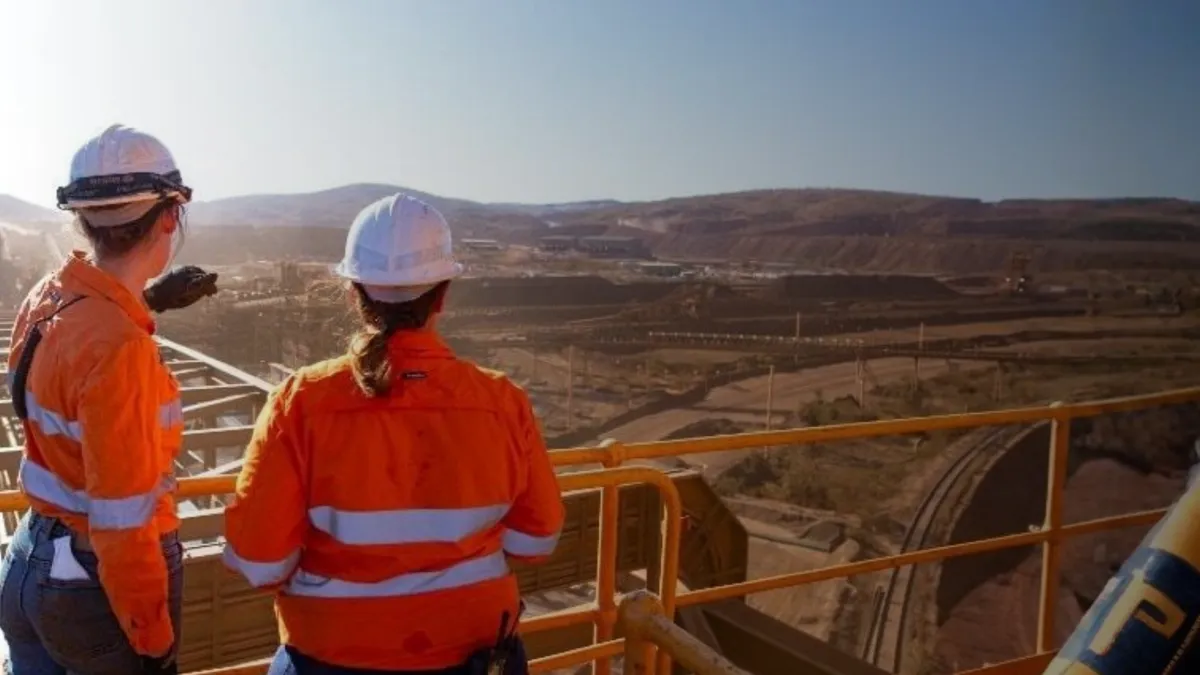
Lessons from Australia’s Beautiful and Broken Mining Country — What It Means for Construction
There’s something confronting about travelling through mining regions in Australia. You see the wealth, the infrastructure, the movement. But you also see the strain on land, on communities, and on the people who do the work.
A recent travelogue exploring Australia’s mining country takes readers across these landscapes. It doesn’t focus only on safety. It weaves together industrial history, environmental impact, community consequences, and the human side of heavy industry.
That broader lens matters.
Because on big industrial sites, whether mining or construction, safety doesn’t sit in isolation. It’s tied to production pressure, workforce culture, contract arrangements, environmental risk, and the lived experience of workers and nearby communities.
And when we narrow safety down to paperwork and metrics, we miss the bigger picture.
Safety Isn’t Separate From the System
In major projects, risk doesn’t exist on its own. It’s shaped by:
How deadlines are set
How contracts are written
How supervisors are supported
How transient or stable the workforce is
How pressure flows from client to contractor to worker
Mining magnifies these pressures because of its remoteness and scale. But construction isn’t immune.
Travel any growth corridor or regional development zone and you’ll see similar patterns like rapid expansion, labour shortages, long hours, subcontracting chains, and environmental sensitivity.
When safety incidents happen, we often investigate the immediate task. But rarely do we step back and ask: What system created the conditions?
That’s the perspective worth sitting with.
The Human Cost Isn’t Always Obvious
In industrial regions, prosperity and hardship can sit side by side.
Some towns boom. Others fade once projects move on. Workers cycle in and out. Families absorb the strain of long rosters. Communities balance economic benefit with environmental consequence.
For construction businesses, especially those working on resource-adjacent or infrastructure projects, this matters.
WHS duties don’t operate in a vacuum. Fatigue risk, mental health strain, skill shortages, and workforce churn all affect site performance and safety outcomes.
Ignoring the broader context doesn’t make it disappear. It just means risk shows up later, usually as injury, turnover, or conflict.
What This Means on Site
Here’s where this lands practically for construction leaders:
Fatigue isn’t just a rostering issue. It’s linked to travel time, job insecurity, overtime culture, and project sequencing.
Supervision quality is influenced by workload. When supervisors are stretched across too many crews, safety conversations become reactive.
Short-term labour creates long-term risk. High turnover weakens site culture and procedural consistency.
Community expectations matter. Environmental controls and noise management aren’t “tick the box” items — they shape community trust.
Production pressure filters down. If timelines are unrealistic at tender stage, risk is embedded before the first excavator hits the ground.
These aren’t abstract ideas. They’re daily realities on Australian sites.
Zooming Out Improves Safety Performance
When we broaden the view, we ask different questions:
Are we building work programs that allow safe execution?
Are contract terms creating unrealistic delivery pressure?
Are our supervisors resourced properly?
Are we honest about fatigue and mental load?
Are we preparing workers for the environment they’re entering?
This doesn’t replace task-based risk management. It strengthens it.
Because systems-thinking stops us treating every incident as a one-off mistake and starts us examining recurring patterns.
A Simple Action Checklist
If you want to bring this broader lens into your construction business, start here:
Review project timelines for realistic sequencing before mobilisation.
Audit supervisor-to-worker ratios on complex jobs.
Assess fatigue exposure beyond shift length (travel, commute, second jobs).
Map your subcontracting chain — identify where safety accountability blurs.
Schedule leadership walk-throughs that include environmental and community lens, not just task checks.
Run toolbox talks that connect site safety to wider impacts — fatigue, mental health, environmental responsibility.
Capture lessons learned at project close-out before teams disperse.
None of this requires grand strategy. It requires attention.
Final Thought
Australia’s industrial success stories are impressive. But the travel through mining country shows they’re complicated.
If construction wants strong safety performance, we need to acknowledge that complexity. Safety doesn’t sit in a folder. It sits inside economic pressure, community expectation, environmental responsibility, and human capability.
When we widen the lens, we don’t weaken safety, we make it more realistic.
If you want support stepping back and strengthening the systems behind your site safety performance, Book a Free Consult Call.