




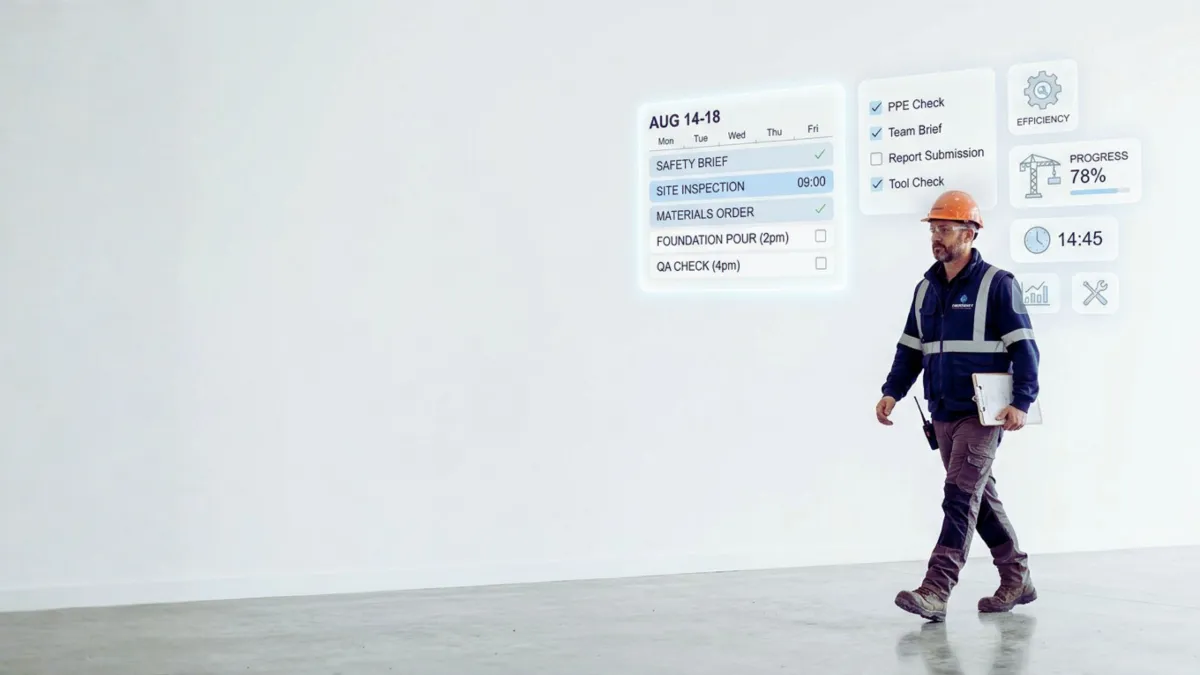
Burnout Isn’t Just Personal. It’s a Work Design Issue.
Recent headlines say nearly half of surveyed Queensland clinicians are at risk of burnout. The conversation often turns quickly toward resilience, mental health programs, and personal coping strategies.
But there is another reality worth acknowledging.
Burnout is rarely about weak individuals. More often, it reflects how the work itself has been designed.
When high demand, long hours, unclear roles, poor consultation, and constant pressure become normal, people don’t simply “burn out.” The system gradually wears them down.
Construction might look very different to healthcare on the surface, but many of the pressures are familiar: tight timelines, labour shortages, regional projects with limited support, growing compliance requirements, and increasing expectations placed on supervisors.
If half your workforce were at risk of physical injury, you would redesign the job.
Burnout deserves the same thinking.
Burnout Is Often Organisational, Not Clinical
Burnout is frequently treated as an individual issue. Something addressed through wellbeing programs, awareness campaigns, or counselling services.
Support services are important. But the risk factors that drive burnout are usually embedded in how work is organised.
Common drivers include:
Unrealistic project timeframes
Chronic understaffing
Poor communication between management levels
Excessive administrative workload
Limited control over how work is completed
Low psychological safety when raising concerns
These are not personal weaknesses. They are organisational conditions.
And under Australian WHS laws, organisational conditions that affect psychological health are part of managing workplace risk.
You can’t yoga your way out of a broken system.
What This Means on Site
On construction projects, burnout rarely presents as someone saying, “I’m burned out.”
Instead, it appears through operational signals:
Increased rework or mistakes
Short tempers and conflict between crews
More sick leave or sudden resignations
Risk-taking behaviours
Workers going quiet during pre-starts
Supervisors stretched too thin to maintain oversight
When supervision becomes diluted and pressure is constant, safety margins shrink.
Fatigue increases. Shortcuts start creeping into the job.
That is when incidents occur.
If a project is operating under chronic stress, it is no longer just a wellbeing concern, it becomes a safety risk.
The broader system pressures that create these conditions are often shaped long before work begins, as explored in Lessons from Australia’s Beautiful and Broken Mining Country – What It Means for Construction.
The Trap: Treating Symptoms, Not Causes
Many organisations respond to burnout risk by investing in awareness campaigns, resilience training, or employee support programs.
There is nothing wrong with those initiatives. Workers should have access to support when they need it.
But if workloads remain unchanged, staffing levels remain inadequate, and consultation remains limited, those programs address the symptoms rather than the cause.
On construction projects, this might look like:
Running mental health awareness sessions while crews continue working extended weeks for months
Encouraging time off while programme pressures discourage people from taking it
Asking supervisors to “be supportive” while their span of control continues to increase
Support matters.
But work design matters more.
Practical Risk Areas in Construction
Across many construction projects, several common work design factors contribute to burnout risk:
Project compression — Deadlines are brought forward without corresponding increases in labour or planning.
Supervisory overload — Supervisors manage both field coordination and growing compliance administration.
Remote and regional pressure — Isolation, travel time, and limited workforce availability increase strain.
Limited consultation during change — Scope changes or sequencing adjustments are communicated after decisions are made rather than discussed with those delivering the work.
All of these factors sit within management control.
A Simple Site-Level Action Checklist
If you want to start addressing burnout risk practically, begin with the basics:
Review workload and staffing against programme realities rather than optimistic assumptions.
Check how many direct reports each supervisor is managing and adjust where necessary.
Review overtime patterns across the last three months. Is it occasional or systemic?
Create a confidential way for workers to raise workload concerns and respond visibly.
Run genuine consultation sessions when schedules change.
Clarify role expectations when projects accelerate.
Watch early indicators such as absenteeism, turnover, or rising near-miss reports.
Many of these pressures are influenced by how performance is measured and managed across a project, something we’ve also explored further in Evolution of WHS Performance Metrics.
None of this is soft policy work.
It is operational management.
The WHS Angle
Australian WHS laws require risks to health and safety, including psychological health, to be managed so far as reasonably practicable.
That means identifying hazards, assessing risks, and implementing appropriate controls.
When chronic workload pressure creates harm, it is not only an HR concern — it is a workplace health and safety issue.
And like any hazard, the hierarchy of controls still applies:
Reduce excessive workload where possible
Improve planning and staffing structures
Provide support where exposure remains
Reversing that order often leads to ineffective solutions.
Final Thought
Burnout is rarely a resilience problem.
More often, it reflects how the job has been designed.
When a large portion of a workforce is showing signs of strain, the more useful question is not “Why aren’t people coping?”
It is: “Why is the work structured this way?”
Construction cannot afford to ignore that question, not for safety, not for productivity, and not for leadership credibility.
Understanding how fatigue and scheduling systems influence behaviour is a critical part of that conversation, particularly where digital tools and rostering decisions shape workload and recovery, as outlined in Your Roster Software Could Be a WHS Hazard - Here’s Why.
If you’d like to review how psychosocial risk is appearing on your projects,