



Work From Home and WHS: Managing Safety Risks in Construction
There’s been plenty of chatter lately about working from home. Some frame it as a workplace right. Others argue it’s killing productivity. It’s turned into a tug-of-war between flexibility and control.
But here’s what’s mostly missing from the conversation: work health and safety.
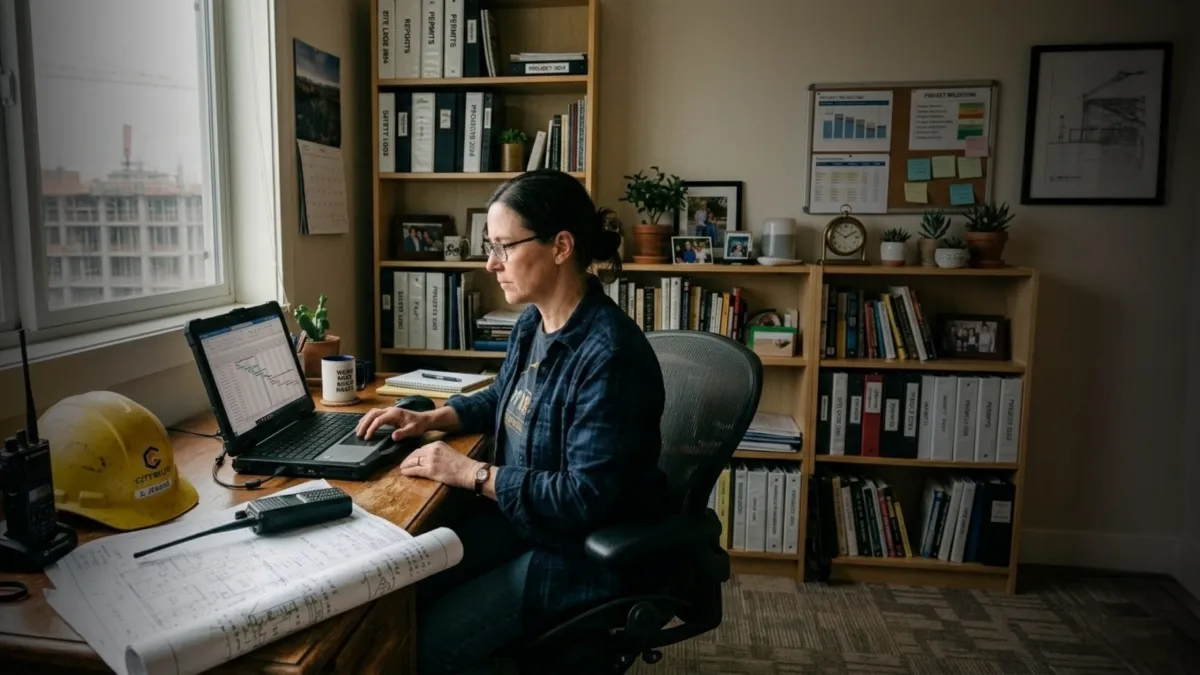
Whether someone is on a tower crane, in a site shed, or answering emails from their spare room, if they’re working, WHS duties still apply.
This isn’t political.
It’s practical.
In construction, we’re used to thinking about physical hazards:
Plant movement
Heights
Manual handling
Remote work feels different.
Quieter. Lower risk.
But different doesn’t mean duty-free.
If a worker is performing their job from home, the business still has an obligation to ensure, so far as is reasonably practicable, that the work setup is safe.
That’s where the real conversation needs to be.
It’s Not About “Rights.” It’s About Risks.
The current public debate often focuses on whether employees should be allowed to work from home. But from a WHS perspective, the more important question is:
If they are working from home, how are risks being identified and managed?
Poor workstation setup can lead to musculoskeletal injuries.
Long hours without boundaries increase fatigue.
Isolation can affect mental health.
Blurred lines between work and home can create psychosocial hazards.
On site, we’d never ignore those risks.
Why would we ignore them just because the workplace has a couch instead of a crib room?
Construction Is Not Immune
You might think this doesn’t apply to construction.
After all, most of the work happens on site.
But consider:
Project managers working from home three days a week
Estimators submitting tenders remotely
Admin staff processing payroll from their kitchen table
Directors running meetings via laptop at 10pm
If they’re employed or engaged by your business and performing work, WHS duties follow the work, not the postcode.
This doesn’t mean conducting invasive home inspections. It means being sensible and systematic about remote work risk.
The same way workload and work design influence safety outcomes on site, they also shape risk in remote settings, something we’ve explored further in Burnout Isn’t Just Personal. It’s a Work Design Issue.
What This Means On Site
Here’s what it looks like in real terms for construction businesses:
Remote work arrangements should be assessed like any other work activity
Workers should have guidance on setting up a safe workstation
Psychosocial risks — workload, isolation, blurred boundaries — should be considered
Managers should be trained to supervise outcomes, not just presence
Clear expectations around work hours and availability should be set
Consultation with workers is still required when arrangements change
If you introduce or allow work-from-home without considering these factors, you’re not being flexible, you’re leaving gaps.
How work is structured, including hours, expectations, and scheduling, plays a major role in safety outcomes.
Particularly where digital systems influence workload and fatigue, as discussed in Your Roster Software Could Be a WHS Hazard.
Avoiding Two Common Mistakes
Mistake 1: Treating Working From Home As Risk-Free
Just because you can’t see the hazard doesn’t mean it’s not there.
Mistake 2: Overcompensating With Micromanagement
Surveillance software and constant check-ins won’t fix poor risk management. They often create new psychosocial risks.
The better approach:
Clear systems
Clear communication
Clear expectations
Exactly what we aim for on site.
A Simple Action Checklist
If you have staff working remotely, even occasionally, start here:
Confirm which roles can work remotely and under what conditions
Provide a simple self-assessment checklist for home workstations
Offer practical guidance on safe desk setup
Set clear boundaries around hours and after-hours contact
Check in on workload and mental health, not just deadlines
Update your policies to reflect how work is actually being done
Document your risk assessment process
This doesn’t need to be complex. It just needs to be deliberate.
Bringing It Back to Reality
Construction is hands-on. We understand risk because we see it every day.
Remote work can feel abstract in comparison. But WHS laws don’t switch off when someone logs in from home.
Risk is still shaped by how work is designed, resourced, and managed, often long before tasks begin, as highlighted in Lessons from Australia’s Beautiful and Broken Mining Country – What It Means for Construction.
If working from home is part of your business model, full time, part time, or occasionally, it deserves the same calm, practical risk management you apply everywhere else.
Less theatre.
More common sense.
More safety clarity.
If you’re unsure whether your remote work arrangements stack up from a WHS perspective, let’s talk.