




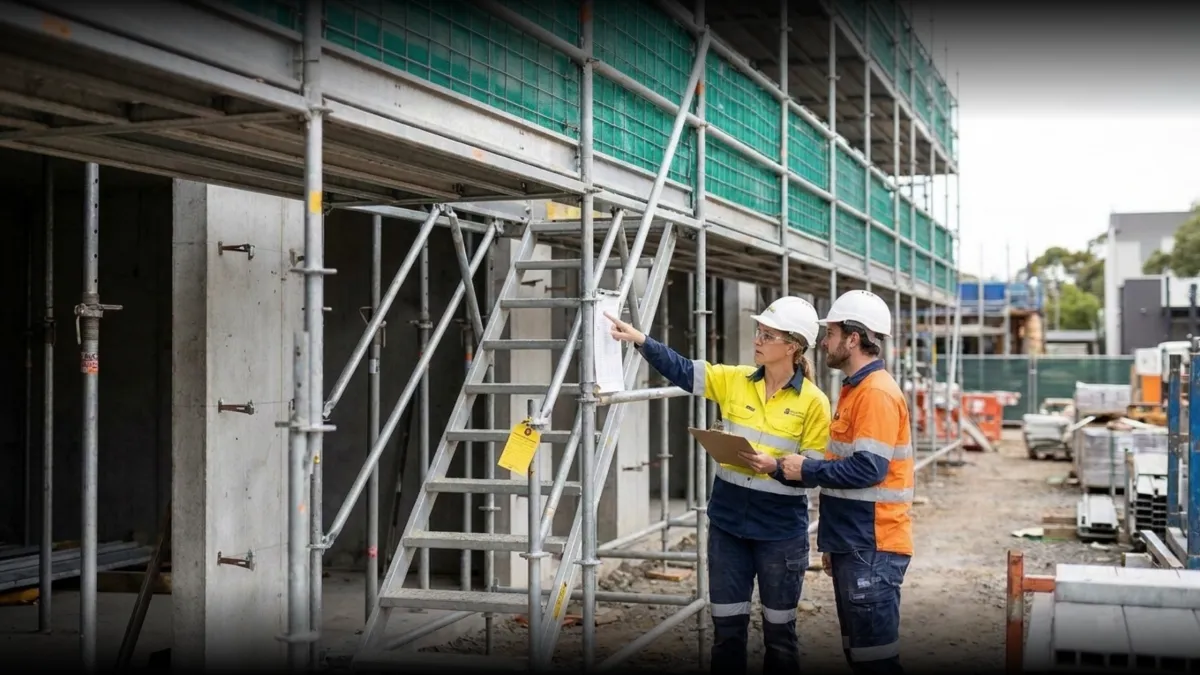
A Scaffold Is Not Safe Just Because It Is Standing
A Scaffold Is Not Safe Just Because It Is Standing
The Handover Is Not the End of the Job
Competency Has to Be Real, Not Assumed
Inspection Has to Reflect the Real Site
Small Changes Can Create Serious Exposure
Supervision Is What Keeps the System Alive
Do Not Let Production Pressure Decide
This Is Mostly a Construction Issue, But Not Only
A scaffold can look ready before it is actually safe to use.
From the ground, it may appear complete. The structure is standing. Access is in place. Workers are waiting to get on with the job. Everyone is under pressure to keep the project moving.
But scaffold safety cannot be judged by appearance alone.
A recent SafeWork NSW matter is a reminder of why this issue matters. SafeWork NSW reported that two construction companies and a director were fined a combined $205,000 after a worker was seriously injured falling about six metres from an unsafely constructed scaffold. The parties have appeal rights, so the point here is not to retell the prosecution as if every detail is closed.
The point is simpler and more practical.
If people are relying on a scaffold to keep them safe, the whole system around that scaffold needs to work.
For Synergy Safety Solutions, this topic is not abstract.
For Kris Cotter, scaffold safety is personal. Before building her business around practical workplace health and safety, Kris worked in high-risk construction environments herself. Her own field experience includes a scaffolding incident that almost cost her life.
That kind of experience changes the way you look at safety.
Scaffold handover, inspection, access, supervision and fall prevention stop being paperwork terms. They become the things that stand between an ordinary workday and a life-changing event.
That is why this topic sits close to the heart of Synergy Safety Solutions. Not because this article is only about Kris’ story, but because scaffold safety is exactly the kind of issue where practical controls need to work before someone finds out the hard way that they do not.
The Handover Is Not the End of the Job
Scaffold handover is an important point of control.
It should confirm that the scaffold has been erected, checked and made available for the intended use. It should also help the site team understand what the scaffold can be used for, where access is provided, what limitations apply and who to contact if something changes.
But handover should not be treated as the end of the safety process.
A scaffold can be suitable at the point of handover and become unsafe later. Other trades may start using it. Materials may be stored on it. Weather may affect it. Components may be removed or shifted. Access may become blocked. People may attach items to it without understanding what that changes.
The handover tells you where the scaffold starts.
It does not guarantee the scaffold will remain safe unless it is properly managed.
Competency Has to Be Real, Not Assumed
Scaffold safety depends heavily on competent people doing the right work at the right time.
That includes the people who plan, erect, alter, inspect, supervise and use the scaffold. Each part matters because a weakness in one part can expose everyone who relies on the structure.
This is where businesses need to be careful about assuming that training records, tickets or contractor arrangements are enough on their own.
A person may be qualified for a certain task, but the business still needs to know whether the work has been done correctly for that scaffold, that site, that height, that access requirement and that work activity.
We made a similar point in A Training Card Is Not the Same as Site-Ready Competency. Training records matter, but they do not replace practical verification in the real conditions of the job.
For scaffolds, that practical verification is critical.
If the scaffold has not been competently erected, checked and controlled, the people using it may have no way of knowing the risk they are stepping onto.
Inspection Has to Reflect the Real Site
A scaffold inspection should not become a quick glance or a routine sign-off.
The person checking the scaffold needs to physically look at whether it remains suitable and safe for the work being done. That means checking the structure, access, platforms, edge protection, ties, foundations, loading, alterations and anything that has changed around it.
The site around a scaffold is not static.
Ground conditions can change. Other work can interfere with access. Materials can be stacked where they should not be. Workers can remove components to make a task easier. Weather can create new issues. A vehicle or plant item may come too close. A subcontractor may start using the scaffold in a way that was never intended.
This is why scaffold inspection is not just about whether the scaffold once looked compliant.
It is about whether it is safe now.
A workplace can look organised on the surface while serious operational risks sit underneath, which is something we explored in The Sites That Looked Safest Sometimes Worried Me the Most. \
Scaffolds are a clear example of that. They can look like part of the normal site setup while quietly carrying risks that only become obvious when someone checks properly.
Small Changes Can Create Serious Exposure
Some scaffold risks start with small changes.
A board is moved.
A guardrail is taken out.
A ladder is shifted.
A section is altered to make room for materials.
A worker climbs where they should not because the proper access is blocked.
A scaffold is used for a task it was not set up to support.
Each of those changes may feel minor in the moment.
The problem is that scaffolds are systems. They rely on parts working together. When one part is changed without proper control, the whole safety outcome can change.
That is why scaffold alterations should not be casual.
If a scaffold needs to be changed, work should stop and the right competent person should be involved. The change should be checked, communicated and controlled before people keep using it.
A simple rule is useful here: If the scaffold no longer matches the way it was handed over, do not assume it is still safe.
Supervision Is What Keeps the System Alive
Good scaffold management needs active supervision.
That does not mean standing over every worker all day. It means making sure someone is paying attention to whether the scaffold is still being used safely and whether the work has drifted from the original plan.
A supervisor should be able to answer practical questions.
Is the scaffold being used for the task it was intended for?
Has anything been altered?
Are workers using the right access points?
Is edge protection still in place?
Are materials being stored safely?
Are different contractors using the scaffold at the same time?
Has weather, ground condition or nearby work changed the risk?
Does anyone know who to call if something looks wrong?
These are not complicated questions, but they are often the difference between a scaffold being managed and a scaffold being assumed safe.
If the answer is unclear, the work needs to pause until the risk is understood.
Do Not Let Production Pressure Decide
Scaffold issues often appear at the point where safety meets schedule pressure.
The scaffold is nearly ready.
The job is already delayed.
The trade is waiting.
The fix looks minor.
The crew has done this type of work many times before.
That is when decisions can become informal. Someone makes a judgment call. Someone works around a missing part. Someone assumes the scaffold contractor will sort it later. Someone thinks the risk is acceptable for a short task.
This is where leadership matters.
Leaders set the standard by what they allow people to work from. If a scaffold is not right, it should not be used because the program is tight or the job feels urgent.
A delay is frustrating.
A fall can change a life.
This Is Mostly a Construction Issue, But Not Only
Scaffolds are most closely associated with construction, and that is where this issue often sits.
But the same principles apply anywhere people rely on temporary access or elevated work platforms to do a task.
Manufacturing sites may use temporary access during maintenance.
Mining and resources workplaces may use scaffold around plant, equipment and processing areas.
Logistics and warehousing operations may need elevated access for repairs or inspections.
Agriculture may involve temporary access around sheds, silos, tanks or structures.
The setting changes, but the question stays the same:
What makes this access system safe for the work being done?
If the answer is mainly “because it looks fine” or “because someone signed it off earlier,” the system needs more attention.
What This Means For You
If your workplace uses scaffolds, the key question is not: “Has a scaffold been provided?”
The better question is: “Is this scaffold safe for the way people are actually using it today?”
That question should be asked before work starts, and it should be asked again when conditions change.
Look at the real work. Look at who is using the scaffold. Look at what materials are being moved. Look at whether access is clear. Look at whether edge protection is complete. Look at whether anyone has altered, overloaded or worked around the scaffold.
Most importantly, look at whether people feel able to stop and raise concerns before using it.
A scaffold should never be treated as safe because it is familiar, because it is standing, or because the job needs to keep moving.
It is safe when the whole system works.
Practical Checks Before People Use a Scaffold
Before workers rely on a scaffold, take time to check the basics properly.
Confirm the scaffold has been erected or altered by competent people
Make sure the handover clearly matches the intended use
Check access, platforms, edge protection, ties, foundations and loading
Confirm inspections are happening and reflect real site conditions
Stop unauthorised alterations, removed components and informal workarounds
Keep materials, tools and debris from creating new risks on the scaffold
Make sure all contractors know who controls the scaffold and how to report concerns
Recheck the scaffold after weather, impact, changes in use or nearby work
Give supervisors clear authority to stop work if the scaffold is not safe
These checks are not about slowing down good work.
They are about making sure people are not asked to trust a structure that has not been properly controlled.
The Real Lesson
A scaffold is not safe just because it is standing.
It is safe when it has been planned properly, erected competently, handed over clearly, inspected honestly and supervised in the way the work actually happens.
It is safe when changes are controlled, not improvised.
It is safe when pressure does not override judgment.
It is safe when workers know they can stop before stepping onto something that does not look right.
For Kris, scaffold safety carries personal weight because she knows how quickly a workday can turn into something life-changing.
For Synergy Safety Solutions, that is why this conversation matters.
Not to create fear.
Not to point fingers.
But to remind businesses that scaffold safety is practical, physical and immediate.
If your workplace uses scaffolds or temporary access systems, now is the time to check whether your controls are working beyond the paperwork.