




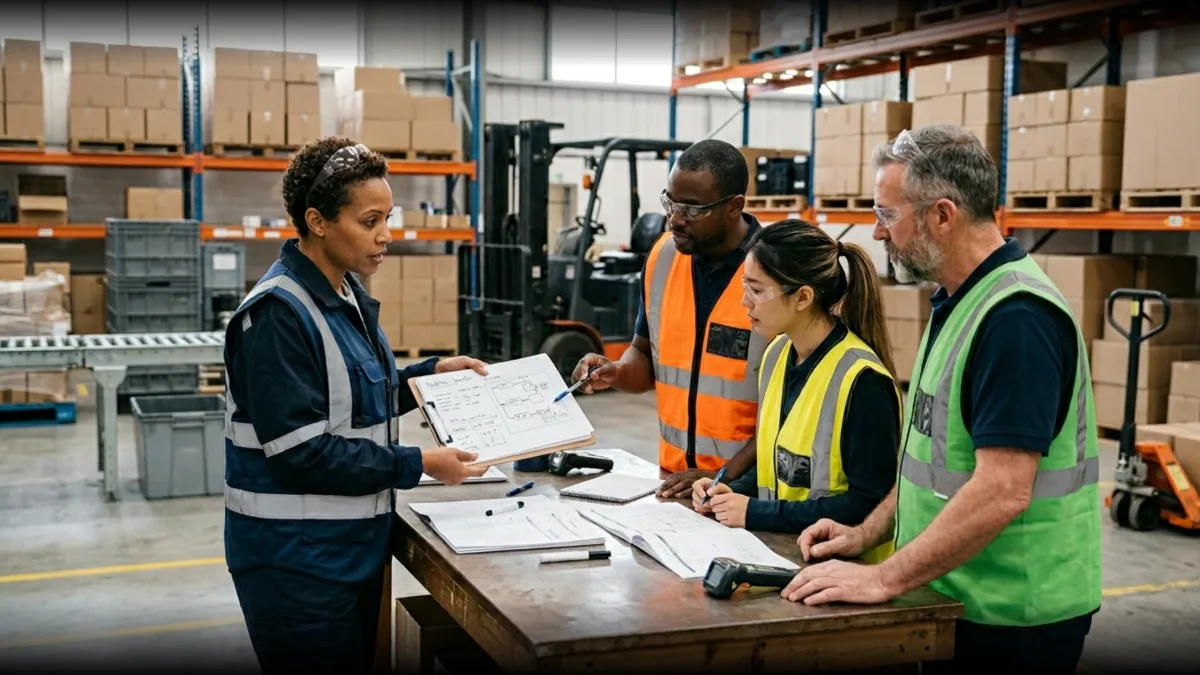
Safety Is Not the Opposite of Productivity
Productivity Is Not Just Output
There has been a lot of talk about productivity lately.
Most of it heads in a familiar direction: work harder, move faster, cut waste, push more through the system.
But in real workplaces, that view is too narrow.
Productivity is not just about how much gets done.
It is about how consistently, safely, and sustainably work can be delivered without creating unnecessary disruption, rework, fatigue, or risk.
That brings workplace health and safety directly into the conversation.
Poor safety is not separate from productivity.
It quietly drains it.
Injuries, near misses, unclear processes, fatigue, poor supervision, equipment issues, and constant firefighting all come from the same place: a system that is not working as well as it should.
In construction, that might show up as rework, rushed sequencing, plant arriving before the site is ready, or crews trying to solve planning problems under pressure.
In logistics, it might be fatigue, delivery pressure, or unrealistic routes.
In agriculture, it might be seasonal workload, long hours, and machinery being used in difficult conditions.
In an office or admin team, it might be unclear roles, competing priorities, and workload creep.
The industries look different.
The pattern is often the same.
When work is poorly planned, poorly supported, or constantly rushed, both safety and productivity suffer.
The False Trade-Off
One of the most unhelpful ideas in business is that safety slows work down.
Sometimes poor safety processes slow work down.
Unclear paperwork slows work down.
Generic procedures that do not match the job slow work down.
But good safety does not slow productive work. Good safety supports it.
A well-planned job usually runs better because people understand the task, the risks, the controls, and the sequence of work.
A properly maintained piece of equipment is less likely to fail at the wrong time.
A supervisor who has time to lead can pick up issues earlier.
A worker who feels able to speak up can help prevent a small issue from becoming a bigger one.
That is not safety getting in the way.
That is safety helping the work flow properly.
What Mature Workplaces Understand
Mature workplaces understand that people are not machines.
They understand that conditions affect performance.
They understand that shortcuts have a cost, even when nothing goes wrong immediately.
They understand that pressure changes decision-making.
This maturity shows up in everyday choices:
Do schedules allow enough time to do the work safely, or is the pressure built in from the beginning?
Do supervisors step in when something looks off, or do they wait until the issue becomes impossible to ignore?
Do workers raise problems early, or do they keep quiet because they do not want to slow the job down?
You can often tell how mature a workplace is by how it behaves under pressure.
When pressure increases, do the systems hold up?
Or do they start to crack?
Safety Is a Productivity Strategy
There is still a tendency to treat safety as a compliance task.
Something separate from the “real work.”
That thinking misses the point.
Good safety practices reduce disruption.
They create consistency.
They support better planning.
They help supervisors lead more effectively.
They help teams understand what good work looks like before the task starts.
All of that feeds directly into productivity.
Think about a workplace where:
the work is planned before people arrive on site
equipment is available and fit for purpose
roles are clear
hazards are identified before the task starts
communication is clear between teams
supervisors are present and engaged
issues are raised early
That workplace is not just safer.
It is likely to run better.
Now compare that to a workplace where people are rushed, instructions are unclear, plant is not ready, access is poor, and hazards are managed on the fly.
Even if no one gets hurt, productivity suffers.
Time gets lost.
Quality drops.
People get frustrated.
Rework increases.
The cost is still there.
It just does not always show up as a safety incident.
The Hidden Cost of “Push Harder”
When productivity is reduced to output alone, the default response is often to push harder.
Work longer.
Move faster.
Fit more into the same day.
Get it done.
That can work for a short period, but it is not a sustainable system.
Over time, the signs start to appear.
fatigue increases
minor mistakes become more common
near misses start creeping in
communication gets shorter
rework increases
people stop raising issues
supervisors spend more time reacting than leading
This is where WHS becomes an early warning system.
If minor incidents, shortcuts, frustration, or rework are increasing, the business may already be seeing signs that the system is under strain.
Ignoring those signs in the name of productivity usually creates bigger disruptions later.
What This Means For You
If you run a business, lead a team, supervise work, or manage projects, this is not about choosing safety over productivity.
It is about understanding that the two are connected.
The question is not: “How do we get more out of people?”
A better question is: “What is getting in the way of the work being done properly?”
That shift changes the conversation.
It moves the focus away from blame and pressure, and toward planning, systems, supervision, communication, and risk control.
For construction businesses, that might mean reviewing how jobs are sequenced, whether supervisors have enough time to manage the work, or whether crews are constantly compensating for poor planning.
For other workplaces, it might mean looking at workload, unclear roles, equipment reliability, communication gaps, or how often people are expected to improvise just to keep things moving.
The goal is not to slow the business down.
The goal is to remove the friction that creates risk, waste, and avoidable pressure.
Practical Actions You Can Take
Start with one job, one process, or one area of work.
You do not need to overhaul everything at once.
Review one recent project or task and identify where time was lost due to poor planning, rework, or unclear communication
Check whether current schedules allow work to be completed safely without constant rushing
Ask workers and supervisors where they regularly have to improvise or work around system gaps
Review minor incidents and near misses as signs of system pressure, not isolated events
Make pre-starts or briefings more focused on real conditions, not routine paperwork
Ensure supervisors have enough time and support to lead work, not just chase progress
Look at whether safety controls are helping the work run properly, or whether they need to be simplified and made more practical
These steps are not complicated.
But they do require honesty.
Most productivity problems are easier to see when you stop treating safety as a separate issue.
A Better Way to Measure Progress
If you want a practical test of whether your workplace is improving, look beyond output.
Ask:
Is the work more consistent?
Are problems being picked up earlier?
Are supervisors less reactive?
Are workers clearer on what is expected?
Are we spending less time fixing the same issues?
Are controls actually helping the job run better?
If the answer is yes, productivity is likely improving in a more sustainable way.
Not because people are being pushed harder.
Because the system is working better.
The Bottom Line
Safety is not the opposite of productivity.
Poor planning is.
Unclear systems are.
Fatigue is.
Rework is.
Supervisors without enough time or support are.
Workers having to constantly adapt around gaps in the system are.
The workplaces that perform well over time are usually not the ones that simply push harder.
They are the ones that understand how work actually happens, remove avoidable friction, and build systems that help people do the job properly.
That is where safety and productivity meet.
If you want help reviewing where safety, planning, and productivity are working against each other in your business, get in touch with Synergy Safety Solutions for a practical conversation about your systems.