




The Workplace Conditions Behind Slips, Trips and Falls
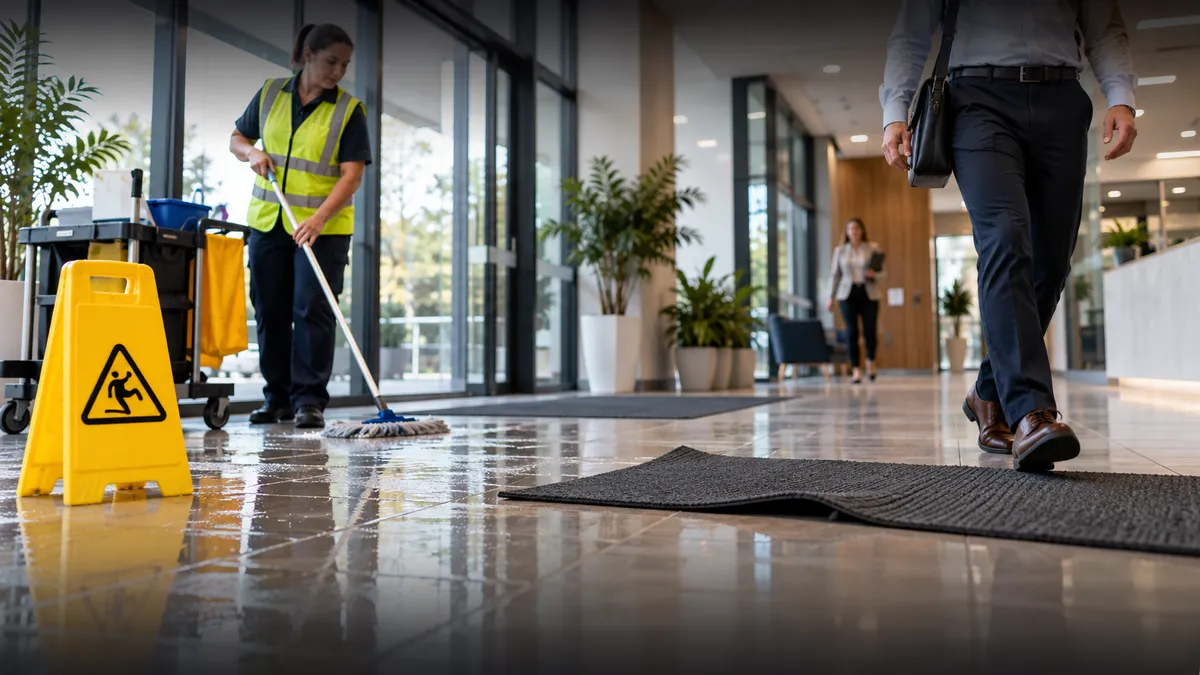
An office entrance still damp after an early-morning clean.
A power cable crossing a walkway used throughout the day.
A loose mat beside a reception desk.
A delivery left in the only clear path between two work areas.
Each changes how people move through a busy workplace.
These risks often begin long before someone loses their footing.
The question is not just whether workers notice a hazard. It is whether the workplace has been designed, maintained and organised to reduce their exposure to it.
Everyday Walking Areas Can Carry Serious Risks
A wet floor, uneven threshold or loose cable can cause serious harm.
In September 2026, Safe Work Australia released a new guide focused on managing slips, trips and falls. In announcing the guide, it reported 32,000 workers' compensation claims for serious injuries arising from slips, trips and falls in 2024-25. That figure covers the broader category, including falls from height, not only falls on the same level.
What makes the new guidance useful is its attention to the conditions behind these incidents, including how work is organised and managed.
Safe Work Australia's Guide to managing the risks of slips, trips and falls helps employers identify hazards and consider effective controls. It looks beyond uneven surfaces, poor housekeeping and inadequate lighting to the way work is arranged.
Housekeeping Is Only Part of the Risk
Clear walkways, spill clean-up and sensible storage matter.
But a floor can be tidy and still present a risk. Its surface may become slippery when wet. A mat may move underfoot. A change in level may be hard to see, particularly where lighting is poor.
Recurring problems can include rainwater in an entry, blocked drainage, deferred floor repairs or cables left across a pedestrian route.
Putting out a warning sign can help alert people to a temporary condition, but it does not remove the condition itself. The cause still needs attention.
If the same hazard keeps returning, another reminder is unlikely to be the whole answer.
How Work Is Organised Changes the Risk
Consider cleaning scheduled while customers and workers are moving through a narrow entrance. Or stock deliveries that regularly occupy a corridor because there is no suitable unloading space.
Maintenance can change normal walking routes. Temporary equipment and materials still need safe access arrangements.
These are planning questions. Can activities be separated? Can the work be scheduled differently? Is an alternative route available and clearly communicated?
When routes change, plan safe access rather than relying on people to avoid obstructions.
Practical Controls Should Come Before Reminders
Where possible, prevent slip and trip hazards through the workplace's design and maintenance.
That might involve repairing an uneven surface, improving drainage, choosing an appropriate slip-resistant floor finish, fixing lighting or providing enough storage so equipment is not left in access ways.
For temporary conditions, controls might include isolating a wet area until it is safe, rerouting pedestrian movement or securing cables away from the normal walking path.
Suitable footwear can help in some workplaces, but it should not replace attention to flooring, access, cleaning and the way tasks are arranged.
The wider leadership lesson is familiar. We explored the difference between visible order and functioning controls in The Sites That Looked Safest Sometimes Worried Me the Most. Here, the practical test is specific: can people move through the workplace safely as conditions change?
The Same Hazard Can Look Different Across Industries
Slips and trips are not limited to industrial environments.
In offices and retail spaces, entrances, loose mats, cleaning schedules and deliveries can affect customer and worker access.
In healthcare and hospitality, frequent movement and wet areas make surface conditions, cleaning arrangements and clear routes particularly important.
In warehouses and maintenance work, stored materials, cables, tools and temporary access changes can create trip hazards alongside normal operations.
Controls should reflect how each workplace is actually used.
What This Means For You
Walk the routes people use during a normal busy period.
Look at entrances, transitions between floor surfaces, corridors, work areas and places where supplies or equipment regularly accumulate. Include routes used by visitors, contractors and delivery drivers.
Ask the people who work there what changes across shifts, during cleaning or when deliveries arrive. They may be able to identify recurring conditions that do not appear during a scheduled inspection.
When a hazard is reported, who controls it and follows through on repairs?
Knowing a hazard exists is only the beginning.
The important question is whether the conditions that create it are actually being changed.
A Practical Slips, Trips and Falls Risk Check
When reviewing ordinary walking and working areas, consider:
Walking routes: Are entrances, corridors, stairs and routes used by workers or visitors clear and suitable for the level of activity?
Floor surfaces: Are wet areas, worn finishes, damaged surfaces, changes in level and loose mats identified and controlled?
Lighting and visibility: Can people clearly see steps, edges and changes in walking surfaces?
Storage and temporary work: Are cables, tools, deliveries and materials kept out of pedestrian routes, or are safe alternatives provided?
Cleaning and drainage: Are spills, tracked-in water and wet cleaning managed without leaving people exposed?
Repairs and reporting: Is there a clear process to report hazards, manage them immediately and confirm that longer-term repairs have been completed?
Workplace changes: Are walking routes reviewed when equipment, staffing, cleaning schedules or normal work activities change?
Safe Work Australia also provides a hazard-identification checklist to support workplace reviews. Any checklist should be used alongside an assessment of the actual work and conditions.
The Real Lesson
Familiar hazards are easily underestimated.
Repeated hazards can reveal gaps in maintenance and management.
Prevention is not only about asking people to watch where they walk. It is about giving them walking areas, work arrangements and controls they can rely on.
The real test is whether the workplace is safer after a hazard has been identified, not whether someone has been reminded to be careful.